
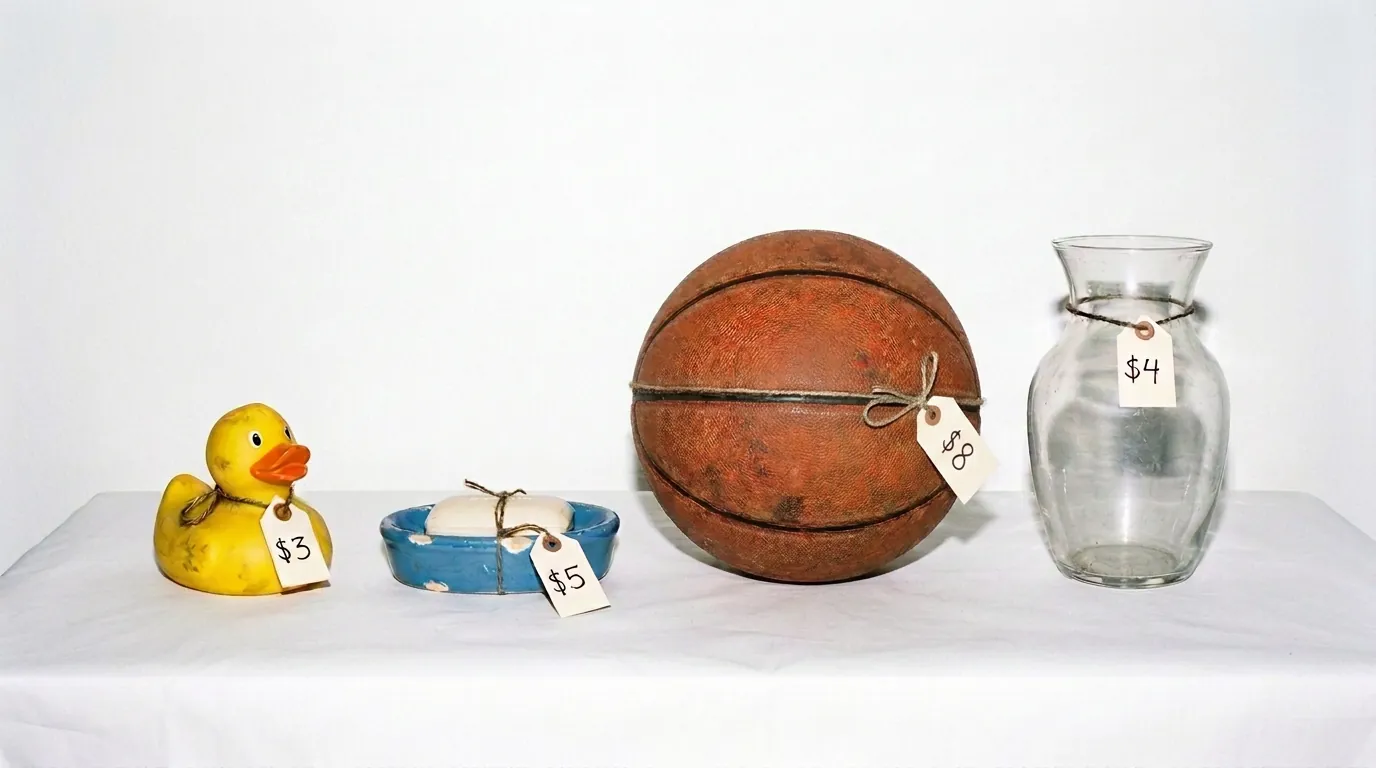
Vinted has been around a lot longer than I thought, since 2008 actually, even though I just discovered it via their relentless cadence of commercials on Disney+. When the commercials were focusing on clothes and fashion, I didn’t think much of it, but when they started running ads that encouraged the selling of random junk lying around the house, something clicked.
To Buy, or Not To Buy; That’s No Longer the Question
Houses are half a million dollars in the Northeast US, new cars are over 4x the price of a home in 1960, and groceries are a luxury. People aren’t buying crap like they used to, so companies like Vinted are encouraging us to trade it amongst ourselves so they can skim even more off the top of the materialistic culture we’ve been conditioned to live by.
Why else would an advertisement show items like a rubber duck, a vase, a basketball as items to sell on their platform? This isn’t eBay. eBay doesn’t say “come sell your junk.” eBay says “come sell your valuables.” Vinted says “sell your clutter for a few bucks so we can make money by helping you sell what you really should donate, repurpose or recycle.”
Cash In On Your Clutter
Look at how Vinted pitched its American launch this year. Its own survey says half of Americans wear half their closet or less, and 42% don’t know what their old clothes are worth. That second number is the whole business model: convince people that every forgotten thing in the house is money they haven’t cashed, and they’ll start treating their closets and attics like inventory. The bigger issue is how much crap has been created, sold and bought as the entire lifecycle. I won’t get into it here, but this screams “spending is the fun part,” not the wearing or owning. Participating in the capitalist, monetarily driven socio-economic system is what really gets people hot!
The idea of squeezing a few more bucks out of something intrinsically and monetarily worthless feels like late stage capitalism to me. Going out of your way to photograph, describe, list, monitor, pack and sell a basketball or a soap dish seems a bit wacky, doesn’t it? But because so many people have accumulated so much crap, they’re jumping at the chance to unload it for a few (a literal few bucks.) What they don’t realize is their mental and physical labor in getting that few bucks is worth way more, and they’re hustling so a company can take a percentage of the transaction they are party to.
No Seller Fees, Only Vinted Fees
Beyond the conceptual dread of trading crap to each other while the company is the only party truly profiting, I knew there had to be a catch to why they so heavily announced the no seller fees on all commercials I’ve seen. How do they make money? Vinted doesn’t charge the seller anything in the US. The fee goes to the buyer instead: a “Buyer Protection” charge of 70 cents plus 5% of the price is added at checkout. (Oh wait, they just changed the name to “Vinted fee” a few days ago. At least it’s honest.) So whoever buys your soap dish is someone else trying to stretch a dollar, and Vinted takes an ounce of flesh from them instead of you. Converted from euros, the company brought in about $1.2 billion in revenue last year (2025, worldwide) on nearly $12 billion worth of stuff changing hands. That’s about a dime of every dollar, skimmed off people passing their leftovers back and forth.
People who resell for a living put it at somewhere between fifteen minutes and close to an hour per listing, once you add up the photos, the description, the messages with buyers and the trip to drop the box off. If that basketball sells for eight bucks, once you tally up the whole process, you’ve paid yourself about the federal minimum wage to clear a shelf. Nobody would apply for that job if it were posted. We take it because the app makes it feel like found money and the psychology of the infinite feed keeps you coming back. What could we be doing with that time instead?
Give In, or Give It Away
We were sold the stuff once. Now we’re being sold the work of getting rid of it, and between the two parties, paying a toll on the way out. Somewhere along the way the vase on the windowsill stopped being a vase and turned into an asset nobody has cashed in yet. That change in how we see our own homes is what Vinted is really selling, and it’s the most late stage part of all of this. Give the basketball to the kid down the street. Shatter that soap dish and turn it into art. Donate that dress you’ll never wear again. See the crack in the machine that is Vinted: a late stage capitalist squeeze that is marketed as a warm hug.